

Contact Us
The Grand Egyptian Museum is not only the world’s largest museum dedicated to a single civilization, it is also one of the most impressive architectural achievements of the 21st century. Designed to bridge Egypt’s ancient past with its modern identity, the museum’s architecture tells a story before visitors even step inside. From its striking façade inspired by the Giza Plateau to its monumental interior spaces, every element is intentionally crafted to honor Egypt’s heritage while offering a world-class visitor experience.
Understanding the design philosophy behind the Grand Egyptian Museum architecture helps travelers appreciate GEM on a deeper level, not just as a place that preserves artifacts, but as an architectural wonder shaped by geometry, symbolism, and the desert landscape itself. Below is the full story of how the GEM came to life.
The Grand Egyptian Museum was conceived as a cultural landmark that would redefine how the world experiences ancient Egypt. The goal was not simply to display artifacts, but to create a modern architectural masterpiece that harmonizes with the surrounding desert, the Great Pyramids, and the natural topography.
The international design competition, won by the renowned architecture firm Heneghan Peng, emphasized three principles: connection, transparency, and timelessness. The designers wanted the building to feel like an extension of the Giza Plateau, a structure that rises gently from the desert and guides visitors toward Egypt’s iconic pyramids.
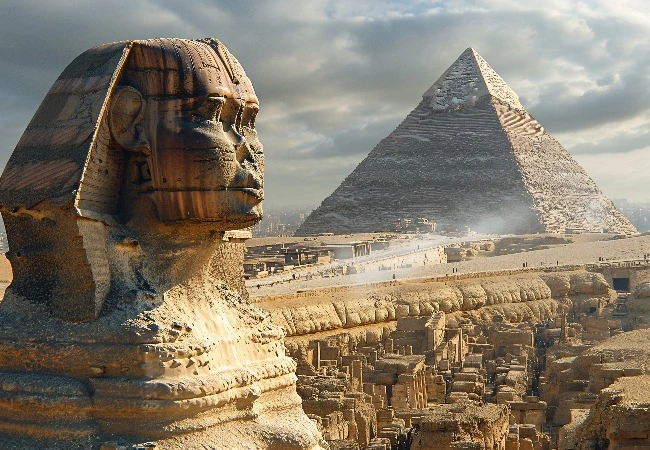
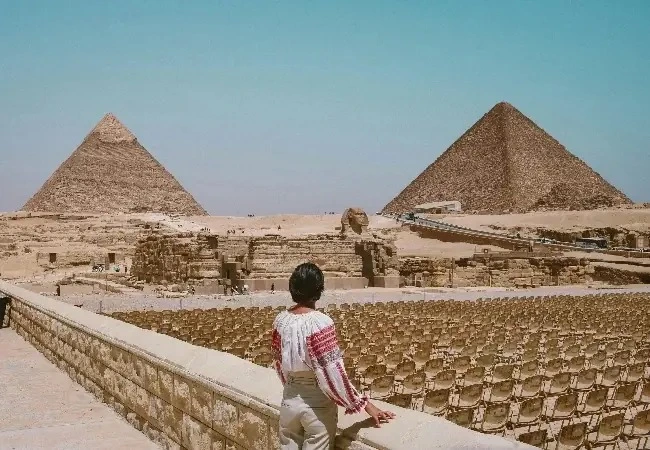
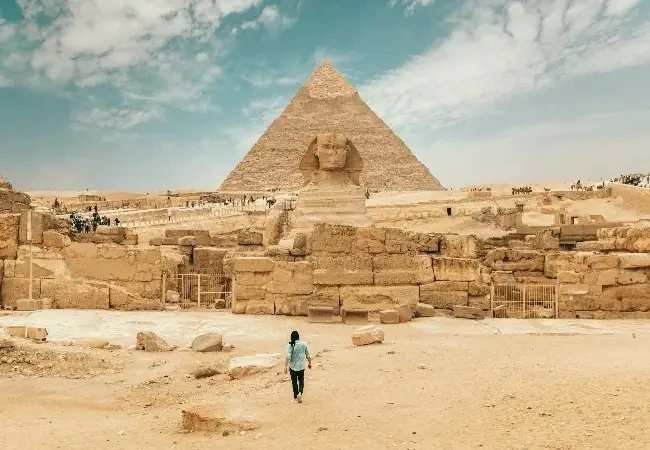
The location of GEM is one of its most defining architectural features. Built at the edge of the Western Desert, the museum occupies a site that descends toward the Nile Valley while facing the Great Pyramid of Khufu directly.
This specific placement allows GEM to create:
Unobstructed pyramid views framed through key architectural angles
A seamless connection between ancient monuments and modern design
A dramatic approach where the building emerges from the desert like a geometric oasis
The entire layout is oriented toward the pyramids, making Egypt’s ancient skyline part of the architectural narrative.
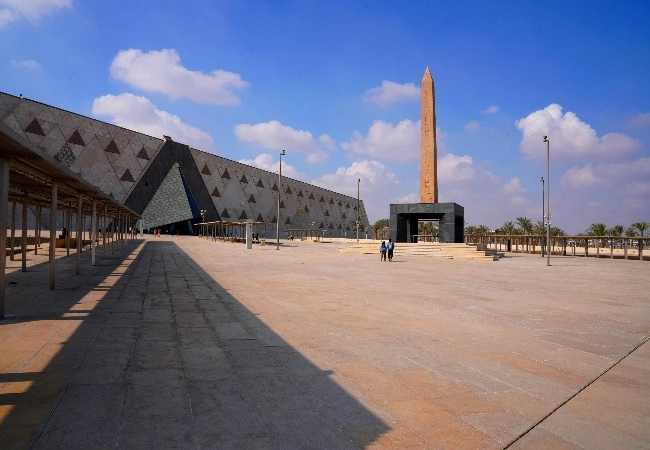
One of the most distinctive aspects of the Grand Egyptian Museum architecture is its reliance on triangular geometry, a mathematical homage to the pyramids at Giza. But beyond its visual impact, this geometry carries deep cultural and spiritual significance. Ancient Egyptians believed in sacred proportions that reflected harmony, balance, and eternity, principles that guided both temple construction and royal tombs. By echoing these patterns, GEM’s design creates a symbolic bridge between the past and the present, inviting visitors to feel the timeless connection between Egypt’s civilization, its desert landscape, and the cosmos.
Key design elements include:
A triangulated façade made from translucent alabaster panels
Sharp desert-inspired angles that echo the pyramid silhouette
Patterns based on ancient Egyptian proportions and sacred geometry
Even the building’s masterplan uses the same triangular grid that guides the Pyramids of Giza. This thoughtful alignment transforms the museum from a simple building into a living tribute to Egypt’s spiritual and architectural heritage.
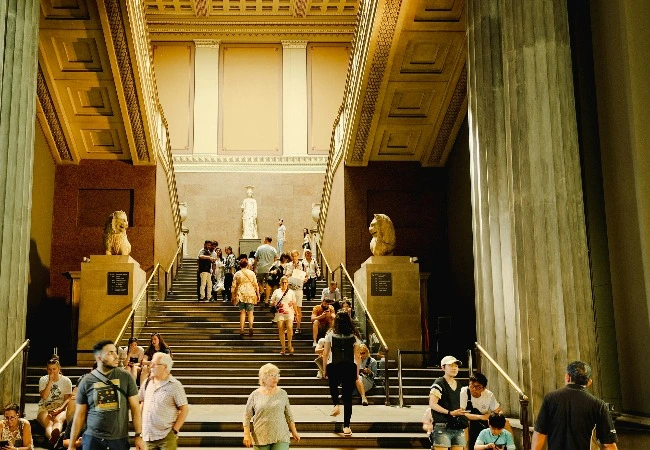
GEM’s entrance hall is designed to make an unforgettable first impression. The moment visitors step inside, they are greeted by the towering statue of King Ramses II, which was transported and restored specifically for the museum.
Architecturally, the entrance hall represents:
Scale: soaring ceilings and vast open spaces
Light: natural illumination that changes with the movement of the sun
Drama: emphasizing the power and influence of ancient Egyptian kings
The hall acts as a symbolic transition from the modern world into Egypt’s timeless history.
One of GEM’s most celebrated architectural features is the deliberate framing of the pyramids from inside the museum. Through carefully created sightlines, visitors are able to look out and see the Great Pyramid perfectly aligned within the building’s geometric openings.
This design choice reinforces three ideas. First one is continuity between past and present; second one is respect for the ancient landscape; and third one is integration of Egypt’s cultural heritage into a modern structure. Architecturally, it is one of GEM’s most iconic achievements.
The materials chosen for the Grand Egyptian Museum architecture were designed to blend with Egypt’s desert environment. The facade uses a warm, sandy color palette, while the alabaster stone allows natural light to filter through in soft, glowing patterns.
Key material concepts:
Alabaster panels to echo ancient Egyptian temples
Local Egyptian stone integrated throughout the building
Reflective surfaces that respond to the desert sun
The result is a building that appears to shift throughout the day, almost mirroring the movement of light across the Giza Plateau.
Sustainability is at the heart of the GEM masterplan. The architecture incorporates:
Passive cooling methods influenced by desert design
Shading systems that reduce heat gain
Energy-efficient lighting
Smart climate control for artifact preservation
Flexible indoor spaces that evolve with future exhibitions
The museum was designed to serve generations of visitors, scholars, and researchers.
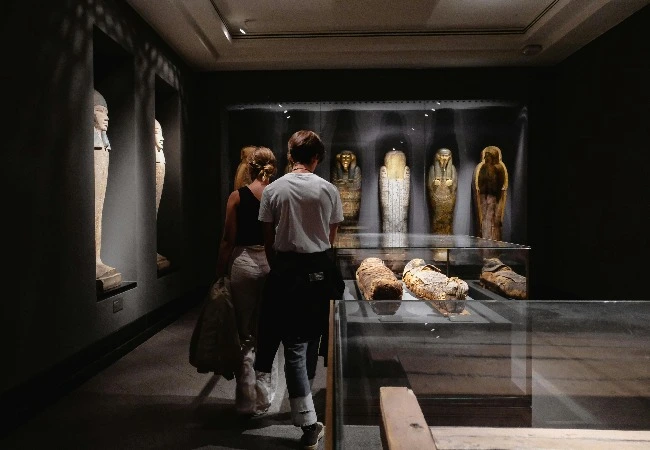
GEM’s interior spaces are just as intentional as its exterior. The galleries follow a chronological and thematic flow that guides visitors through Egypt’s ancient history. Each section is designed with spacious layouts, dramatic lighting, and storytelling elements that enhance the artifacts on display.
Highlights include:
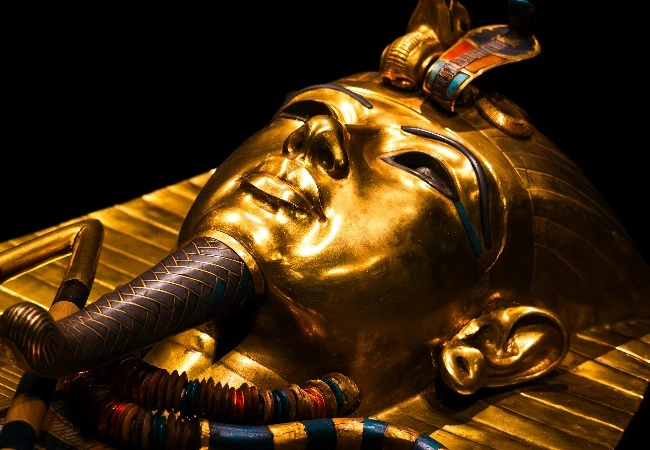
The Tutankhamun Galleries featuring the full collection
Monumental statues positioned along a central grand staircase
Climate-controlled exhibition halls for delicate artifacts
Modern technology including AR, VR, and interactive features
Beyond its stunning architecture and priceless artifacts, the Grand Egyptian Museum offers a range of facilities designed to make your visit smooth, enjoyable, and immersive.
Cafés & Restaurants: Relax in modern cafés offering refreshments, traditional Egyptian treats, and scenic views of the Giza Plateau. Perfect for a coffee break after exploring the galleries.
Gift Shops: Take home a piece of Egypt with handcrafted souvenirs, replica artifacts, books, and jewelry inspired by the museum’s collections.
Accessibility: GEM is fully accessible for visitors with mobility needs, featuring ramps, elevators, and accessible restrooms throughout the building.
Guided Tours & Audio Guides: Enhance your experience with expert-led tours or self-paced audio guides, providing insights into the artifacts, architecture, and history.
Photography & Observation Points: Designated spots allow visitors to capture the museum’s grandeur without disrupting the exhibits, including breathtaking views of the Great Pyramids.
The Grand Egyptian Museum is more than a collection of artifacts, it’s an architectural masterpiece, a journey through 5,000 years of history, and a space where Egypt’s past and present meet. From its desert-inspired geometry to the immersive galleries and panoramic views of the Giza Pyramids, every detail is designed to inspire awe and deepen your connection to ancient Egypt.
Whether you’re wandering through the Tutankhamun galleries, marveling at the monumental statues, or enjoying a quiet moment at the museum café, GEM offers an unforgettable experience for travelers of all ages.
Ready to explore Egypt like never before? Plan your adventure with Egypt tours and discover the Grand Egyptian Museum along with the wonders of this timeless land.
Its design uses triangular geometry inspired by the pyramids, a desert-integrated façade, sustainable materials, and panoramic views aligned with the Giza Plateau.
The GEM was designed by Heneghan Peng Architects, winners of the international competition to create a world-class cultural landmark.
The location connects modern Egypt to its ancient heritage. The building is positioned to frame direct, intentional views of the Great Pyramid.
The facade uses alabaster stone, geometric panels, and natural desert-toned materials that blend with the Giza landscape.
Yes. The architecture includes passive cooling, energy-efficient systems, and climate-controlled spaces designed for both visitors and artifact preservation.