

Contact Us
Few archaeological discoveries have ever captured the world’s imagination like the treasures of King Tutankhamun. When British archaeologist Howard Carter unearthed the boy pharaoh’s tomb in 1922, the world stood still. Gold, jewels, and artifacts buried for over 3,000 years told a story of unimaginable wealth and artistry, a glimpse into the splendor of ancient Egypt.
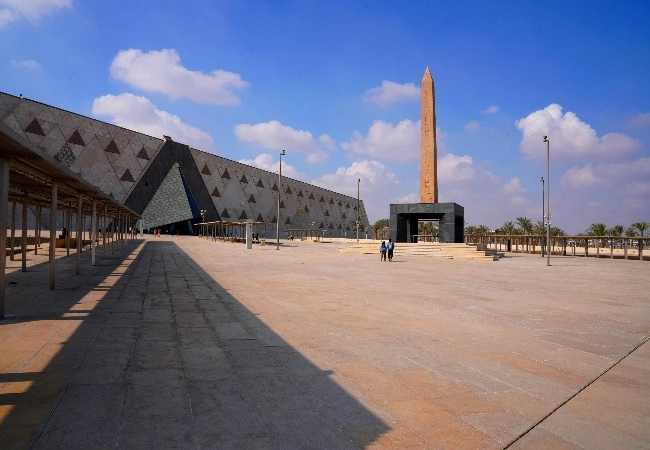
Now, for the first time, every one of these treasures is displayed together under one roof at the Grand Egyptian Museum in Giza. This is more than just an exhibition; it’s a journey into the life, death, and legacy of Egypt’s most famous pharaoh, a once-in-a-lifetime experience for anyone visiting Egypt.
A century ago, in the Valley of the Kings near Luxor, Howard Carter made history. After years of searching, his team uncovered the sealed tomb of Tutankhamun, an almost-intact royal burial packed with more than 5,000 objects. The discovery was an archaeological miracle, a window into the 18th Dynasty, when Egypt was at its height of power and artistry.
For decades, most of King Tut’s treasures were scattered between Cairo’s Egyptian Museum and international exhibitions. But now, at the Grand Egyptian Museum, they finally come home, carefully restored, beautifully curated, and displayed in a setting worthy of their importance.
Imagine becoming king of the world's most powerful civilization at just nine years old. That was Tutankhamun's reality when he ascended Egypt's throne around 1332 BCE, a child thrust into a role meant for gods.
The boy king inherited more than just a crown, he inherited chaos. His father, the radical pharaoh Akhenaten, had turned Egypt's religious world upside down, abandoning centuries of tradition to worship a single sun god. Temples were closed, priests were angry, and the kingdom was in turmoil. Young Tutankhamun, guided by powerful advisors, had to fix it all.
And he did. During his short ten-year reign, the boy pharaoh restored the old gods, reopened the sacred temples, and brought stability back to Egypt. He moved the royal court back to Thebes, commissioned grand building projects, and worked to heal a divided nation. Not bad for a teenager.
But Tutankhamun's story ends tragically. At just 19 years old, the young pharaoh died under mysterious circumstances. Modern science suggests a combination of genetic disorders, a severe leg injury, and possibly malaria may have claimed his life. He left no heir, and with his death, his dynasty's direct line ended.
Here's the beautiful irony: because Tutankhamun was a minor pharaoh who died young, grave robbers largely overlooked his tomb. While the grand tombs of more famous pharaohs were plundered, Tut's burial remained hidden and nearly intact. The boy king who made little impact during his life became Egypt's most famous pharaoh 3,000 years after his death.
Inside the Grand Egyptian Museum, the Tutankhamun Galleries stretch across two vast halls, designed to mirror the layout of his tomb. Every object found in the burial, from the smallest amulet to the grand golden shrines, is displayed exactly as Carter found them, telling the story of the boy king’s short but fascinating life.
The legendary golden mask of Tutankhamun remains the centerpiece of the collection. Crafted from solid gold and inlaid with semi-precious stones, it’s one of the most iconic symbols of ancient Egypt. Seeing it in person is breathtaking, the details are so precise that the mask seems almost alive.
Tutankhamun’s royal chariots, bows, and daggers reveal another side of the pharaoh, not just a divine ruler, but also a warrior and sportsman. The museum’s lighting and displays bring these objects to life, showing how they were used in rituals and daily life.
Beyond gold and glory, the exhibition highlights the personal side of the young king. You’ll find delicate jewelry, furniture, cosmetics, and board games that humanize Tutankhamun, a teenager who lived in luxury, surrounded by beauty and devotion.
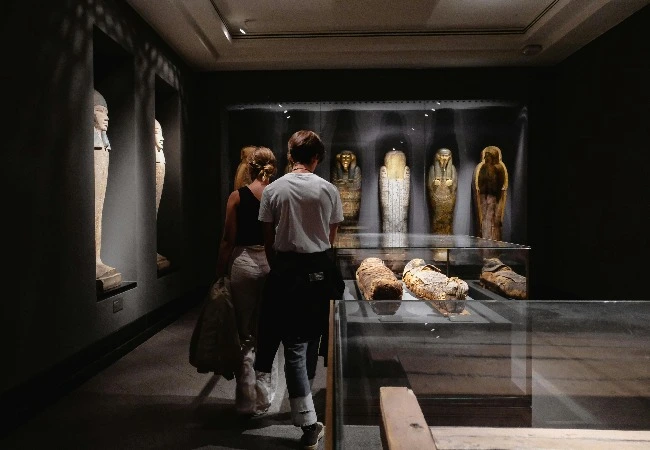
Perhaps the most awe-inspiring display is the series of nested coffins and shrines that once surrounded the king’s mummy. Each layer, from gilded wood to solid gold, tells the story of the ancient Egyptians’ deep belief in the afterlife. Standing before these massive shrines is like stepping into the sacred chambers of eternity.
What sets the Grand Egyptian Museum apart isn’t just the scale, it’s the storytelling. Each room is carefully curated to take visitors on an emotional and historical journey, enhanced by state-of-the-art lighting, temperature control, and immersive displays.
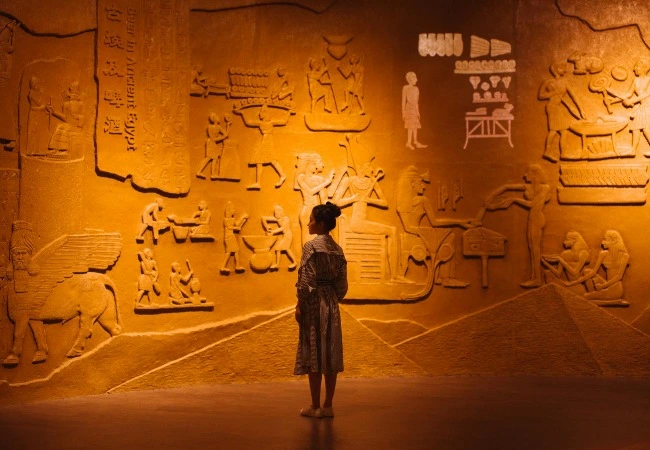
Unlike traditional museums, the Grand Egyptian Museum allows visitors to connect personally with the artifacts. Interactive screens, multimedia projections, and detailed reconstructions help visitors visualize how these treasures once looked inside the Valley of the Kings. It’s an exhibition that blends the ancient and the modern in perfect harmony, preserving Egypt’s past while embracing the future of museum design.
Getting King Tut's treasures ready for the Grand Egyptian Museum wasn't just about packing boxes and moving them across Cairo. It was a massive, nearly two-decade-long mission to save artifacts that had survived 3,000 years but were finally showing their age.
Think about it: wooden chariots, delicate textiles, leather sandals, all buried in the desert for millennia. While Tutankhamun's sealed tomb protected these treasures from ancient grave robbers, time, humidity, and decades of international touring took their toll. Many objects arrived at the conservation labs fragile, damaged, and in desperate need of care.
Enter a dedicated team of Egyptian and international conservators who became the guardians of history. Using cutting-edge technology like 3D scanners and X-ray analysis, they examined every artifact without touching them. Each piece was photographed, documented, and studied before a single restoration began.
The golden chariots are a perfect example. Found collapsed in pieces inside the tomb, they looked like an impossible puzzle. Conservators spent years carefully reassembling them, using special adhesives that future experts can reverse if better techniques are discovered. Every decision was made with the future in mind.
The Grand Egyptian Museum itself is a conservation masterpiece. Climate-controlled galleries maintain perfect temperature and humidity levels, UV-filtered lighting protects against fading, and specially designed cases shield the artifacts from vibration and pollution. It's not just a museum, it's a high-tech preservation vault disguised as a visitor experience.
This incredible effort ensures one thing: the treasures that survived 3,000 years in a tomb will survive thousands more in their new home. Your children, and their children, will stand before the golden mask of Tutankhamun just as you will, connected across time to Egypt's eternal golden age.
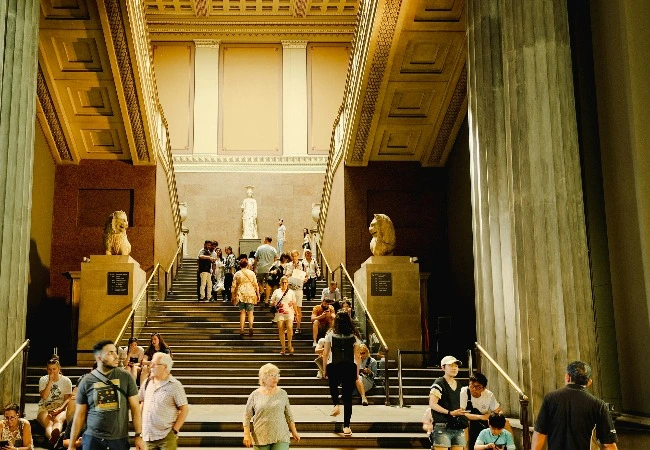
The Tutankhamun Halls are located in the museum’s eastern wing, just beyond the monumental statue of Ramses II that greets visitors at the entrance. The layout ensures that visitors move through the exhibition chronologically, from Tutankhamun’s life and reign to his burial and afterlife.
Opening Hours: 8:30 AM to 7:00 PM daily.
Tickets: Entry tickets to the Grand Egyptian Museum can be purchased online or at the venue, with guided tours available for those who want a deeper dive into King Tut’s story.
Best Time to Visit: Early morning or late afternoon when the museum is quieter, allowing more time to admire the artifacts in peace.
For those planning a longer Egypt vacation, pairing your Grand Egyptian Museum visit with a Nile Cruise to Luxor and Aswan is a perfect way to trace Tutankhamun’s world from Giza to the Valley of the Kings.
Seeing the treasures of King Tutankhamun at the Grand Egyptian Museum is more than a bucket-list item, it’s a bridge across 3,000 years of history. Every artifact carries a whisper from Egypt’s golden age, and standing among them, you can almost feel the presence of the young pharaoh himself.
Whether you’re an avid history lover or a casual traveler, this exhibition will leave you spellbound. It’s a reminder that Egypt isn’t just about ancient ruins, it’s a living story that continues to unfold.
The treasures of King Tutankhamun have fascinated the world for over a century, but seeing them reunited in the Grand Egyptian Museum is an experience beyond words. It’s a moment of history, artistry, and wonder, one that every traveler to Egypt should witness.
If you’re planning your trip to Egypt, make sure to include a Grand Egyptian Museum tour on your itinerary and witness the timeless splendor of the King Tut treasures for yourself.
1. What can I see in the King Tutankhamun exhibition?
The exhibition includes over 5,000 artifacts from the pharaoh’s tomb, from the iconic golden mask and jewelry to chariots, furniture, and his royal sarcophagus.
2. Where are King Tut’s treasures located now?
All of King Tut’s treasures are now housed at the Grand Egyptian Museum in Giza, displayed together for the first time since their discovery.
3. Is the golden mask of Tutankhamun at the Grand Egyptian Museum?
Yes, the famous golden mask is one of the main highlights of the Tutankhamun galleries at the Grand Egyptian Museum.
4. How many artifacts were found in King Tut’s tomb?
Over 5,000 items were discovered in Tutankhamun’s tomb, ranging from gold jewelry and statues to everyday objects from his royal life.
5. Can I book a tour to see the King Tut treasures?
Absolutely. You can book a Grand Egyptian Museum tour that includes access to the Tutankhamun exhibition, guided commentary, and skip-the-line entry options with Nut Travel.